.jpeg)
印
Houda BouffadaTeacher of Chinese Thought
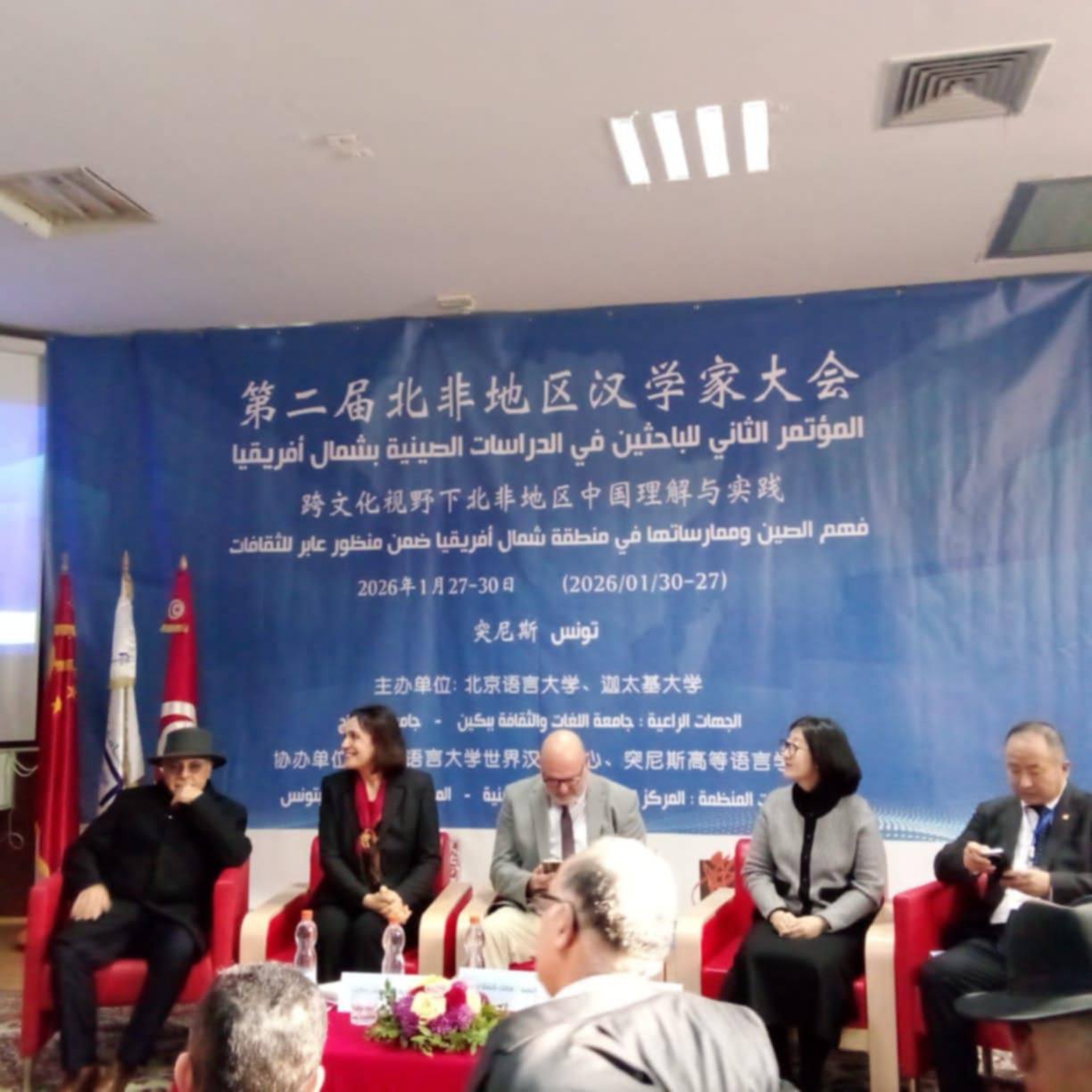
Cultural Interactions between China and Algeria and Perspectives on Confucian Dialogue
Sino-Algerian relations have their roots in the late 1950s, when China supported the Algerian Revolution, thereby contributing to the establishment of strong relations based on solidarity and cooperation between the two peoples. Following Algeria’s independence in 1962, bilateral relations continued to develop, marked by converging positions on numerous international issues, particularly regarding support for liberation movements, solidarity among countries of the Global South and developing countries, as well as the defense of the principles of sovereignty, independence, and non-interference in the internal affairs of states.
With the profound transformations that China has undergone in recent decades and its emergence as a major economic power on the international stage, alongside the strengthening of its presence and engagement in Africa, Sino-Algerian relations have acquired a new dynamic. This cooperation has expanded into the economic, commercial, investment, higher education, research, and cultural fields. Strategic initiatives, particularly the Belt and Road Initiative, have contributed to broadening the areas of cooperation and strengthening rapprochement between the two countries. However, the deepening of the economic partnership also highlights the need to strengthen its cultural and human dimension, which is essential for building a more comprehensive, balanced, and sustainable partnership.
In this context, cultural exchanges are of particular importance as an effective means of promoting mutual understanding, bringing peoples closer together, overcoming stereotypes, and encouraging dialogue between cultures and civilizations. Cooperation in the academic, artistic, and educational fields can also open up new opportunities for both countries, particularly through the development of joint scientific research programs, student and faculty exchanges, the organization of cultural and artistic activities, and the strengthening of language education. Such initiatives can contribute to building lasting bridges between Chinese and Algerian societies and, consequently, to fostering economic cooperation, as cultural understanding constitutes an important foundation for building trust and developing long-term relations.
From this perspective, Confucian philosophy can constitute a valuable area for cultural dialogue between China and Algeria, given the ethical and human values it promotes, such as respect for others, lifelong learning, discipline, responsibility, social harmony, and the importance attributed to the family, community, and education in shaping the individual. However, the objective is not to transfer or adopt a foreign philosophical system literally, but rather to examine the points of convergence and difference between these principles and Algerian culture and value system, with the aim of fostering a dialogue based on mutual respect and reciprocal enrichment.
Based on this perspective, this study aims to analyze the possibilities of interaction between Confucian philosophy and Algerian culture, by highlighting the values and principles that may bring the two traditions closer together, while exploring how cultural and academic exchanges can contribute to deepening rapprochement between the two countries. It also examines the potential for dialogue between Chinese and Algerian cultures to contribute to the construction of a shared vision of the future, based on mutual understanding and respect, and capable of strengthening cooperation in the educational, cultural, and social fields.
Thus, Sino-Algerian relations should not be limited to economic and strategic interests alone. They can evolve towards a deeper cultural and civilizational partnership, in which intercultural dialogue becomes an instrument for bringing peoples closer together, enriching shared cultural heritage, and contributing to the development of more balanced and cooperative international relations in a world characterized by growing interdependence and cultural diversity.